Academics & admin
Tutoring & Academic Success Center
Free tutoring in Walter, Wilson, and Magrath Libraries plus online — drop-in and appointments
The student guide to Minneapolis and St. Paul, Minnesota: where to eat, live and get help, what a year really costs, and the free stuff most students miss.
Source: U.S. Department of Education, College Scorecard.
After grants and scholarships, by family income. Average: $17,330.
Academics & admin
Free tutoring in Walter, Wilson, and Magrath Libraries plus online — drop-in and appointments
Getting around
Free campus bus routes connecting East Bank, West Bank, and St. Paul campuses via the Campus Connector express service.
Health & safety
Free confidential counseling including individual therapy, group counseling, crisis support, and psychiatric services.
Student life
Free-admission art museum in Frank Gehry's iconic stainless steel building overlooking the Mississippi
Dining halls, quick bites and coffee on campus.
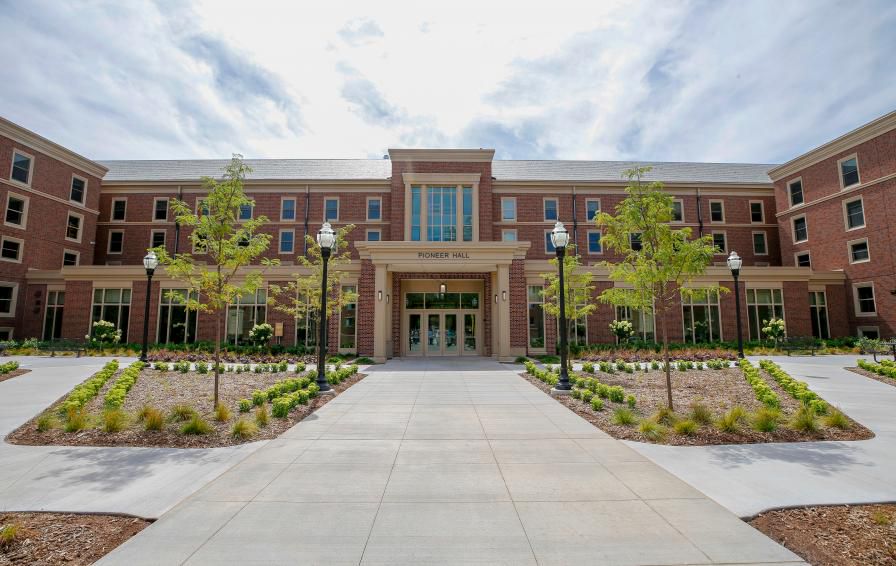
All-you-care-to-eat dining hall in the Superblock with the longest hours on campus
615 SE Fulton StUMN's largest all-you-care-to-eat dining hall with eight serving venues seating 850 in the renovated 1932 residence hall.
615 Fulton St SE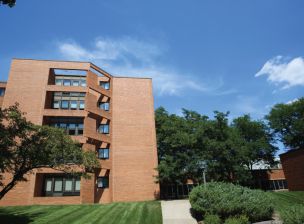
All-you-care-to-eat dining hall in the Superblock neighborhood
1458 SE 4th StFresh-focused dining hall widely considered the best on campus, known for creative rotating menus and strong vegetarian options.
326 17th Ave SE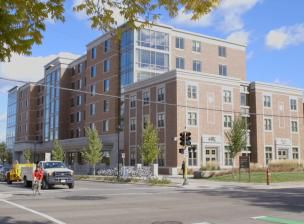
Modern 350-seat fresh food market in the 17th Avenue Residence Hall
1700 University Ave SEThe only residential dining hall on the St. Paul campus, popular with agriculture, biology, and veterinary students.
1458 Cleveland Ave N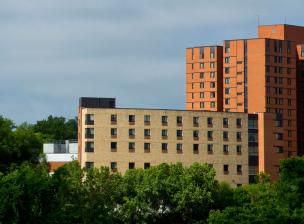
All-you-care-to-eat dining hall on the West Bank
412 SE 22nd AveEast Bank dining hall near Dinkytown and athletic facilities, known for a quieter atmosphere and dietary accommodations.
1122 University Ave SE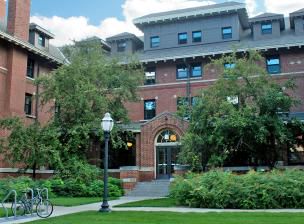
All-you-care-to-eat dining in the East Bank River neighborhood
1122 University Ave SEWest Bank dining hall in Middlebrook Hall featuring omelet stations, sandwich bar, salad bar, and vegetarian options.
412 22nd Ave SDining hall accessible to Comstock and Yudof Hall residents, offering all-you-care-to-eat service near Coffman Union.
210 Delaware St SE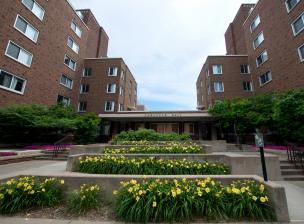
Smaller dining hall in Comstock Hall on the East Bank, primarily serving Comstock and Yudof residents
210 Delaware St SE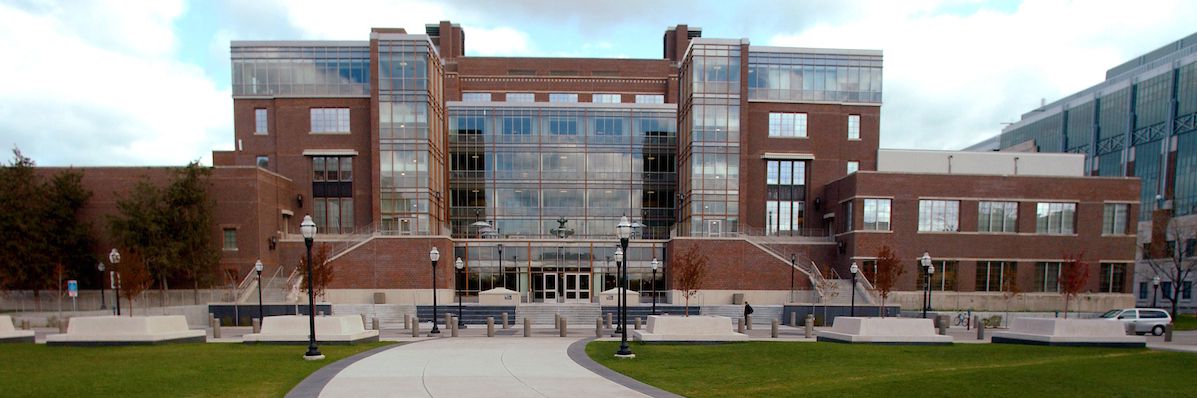
Panda Express, Burger Studio, and grab-and-go options in Coffman Memorial Union
300 Washington Ave SE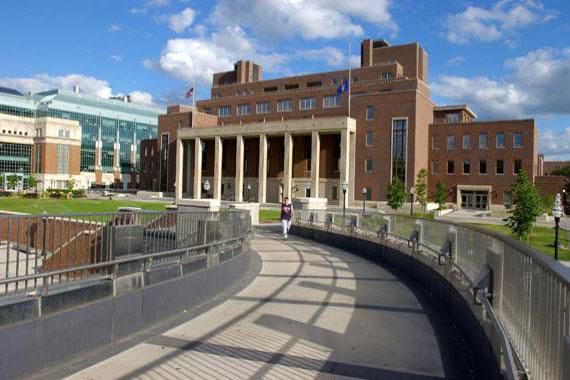
Convenience store and grab-and-go options in Coffman Union
300 Washington Ave SECoffman Union's main food court featuring Einstein Bros. Bagels, Panda Express, King's Hawaiian Grill, and more retail options.
300 Washington Ave SE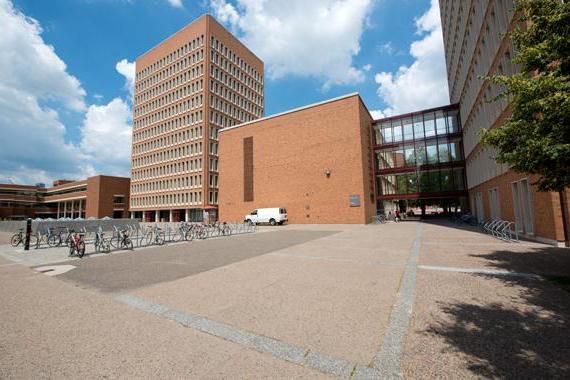
Subway, Papa Johns, ecoGrounds coffee, and convenience store on the West Bank
269 19th Ave SCaribou Coffee in the basement of Moos Tower on the health sciences campus, popular with pre-med and health science students.
515 Delaware St SE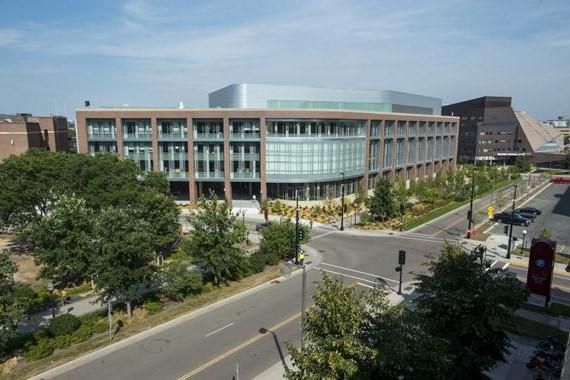
Smoothie and protein shake bar inside the Recreation and Wellness Center
123 SE Harvard StCaribou Coffee on the West Bank with a roof deck patio and skyway connection to the Carlson School of Management.
1925 4th St S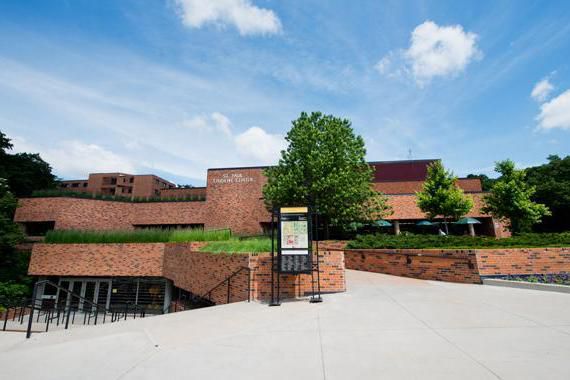
Quick-service dining in the St. Paul Student Center with burgers, salads, and coffee
2017 Buford AveResidential convenience market in Centennial Hall offering snacks, beverages, grab-and-go meals, and late-night market meal swipes.
614 Delaware St SEWest Bank convenience market in Middlebrook Hall with snacks, essentials, and grab-and-go items with late-night meal swipe access.
412 22nd Ave SEast Bank convenience market in Sanford Hall near Dinkytown with snacks, toiletries, and late-night market meal options.
1122 University Ave SEResidence halls, apartments and help finding a place.
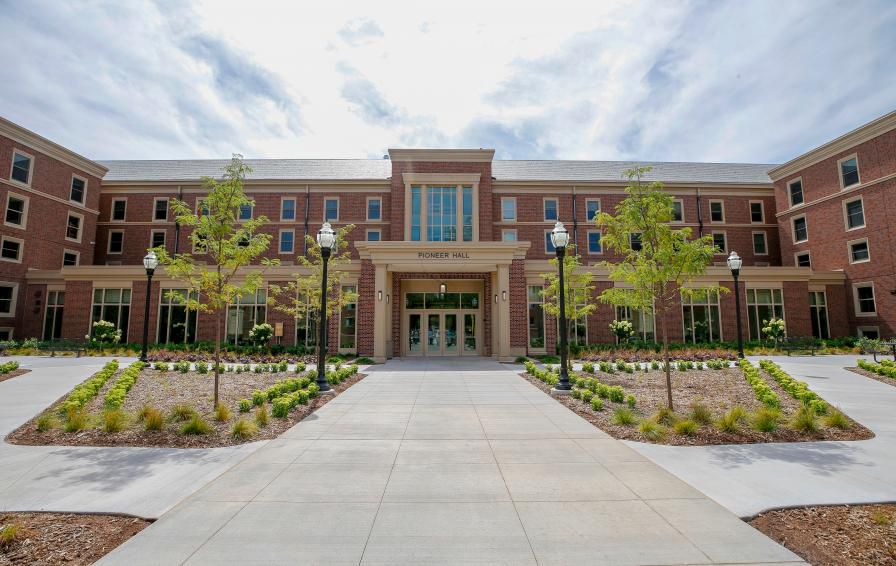
Four first-year residence halls (Pioneer, Centennial, Frontier, Territorial) housing 2,800 students on East Bank
615 SE Fulton StHigh-rise residence hall in the Superblock neighborhood on East Bank — popular with first-year students with close proximity to dining and…
614 Delaware St SESuperblock residence hall offering traditional double rooms as part of the core first-year housing cluster on East Bank.
701 Fulton St SE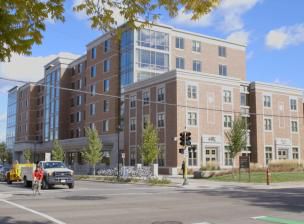
Modern 600-bed residence hall with a fresh food market dining facility on East Bank
1700 University Ave SELarge Superblock residence hall known for its active social community with traditional and renovated rooms and a ground-floor dining hall.
417 Walnut St SE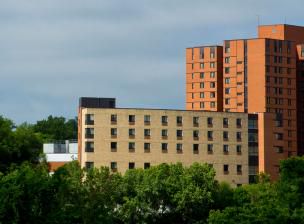
Middlebrook, Comstock, and Sanford Halls along the Mississippi River — quieter atmosphere
412 SE 22nd AveSuite-style residence hall on East Bank with semi-private bathrooms — popular with upperclassmen and honors students.
920 17th Ave SEWest Bank residence hall with dining hall, convenience store, and river views — ideal for music, business, or law students.
412 22nd Ave SShuttles, parking and accessible rides.
Free campus bus routes connecting East Bank, West Bank, and St. Paul campuses via the Campus Connector express service.
511 Washington Ave SE
Lime and Spin scooters available across campus, plus the Gopher Bikes free loaner program for off-campus students
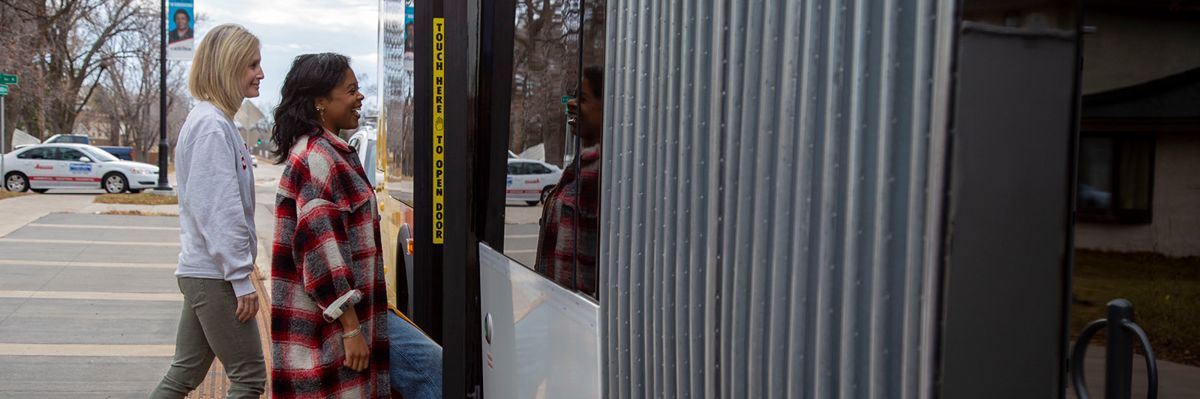
Unlimited Metro Transit bus and light rail rides included with your U Card — activate at Coffman Union
300 Washington Ave SE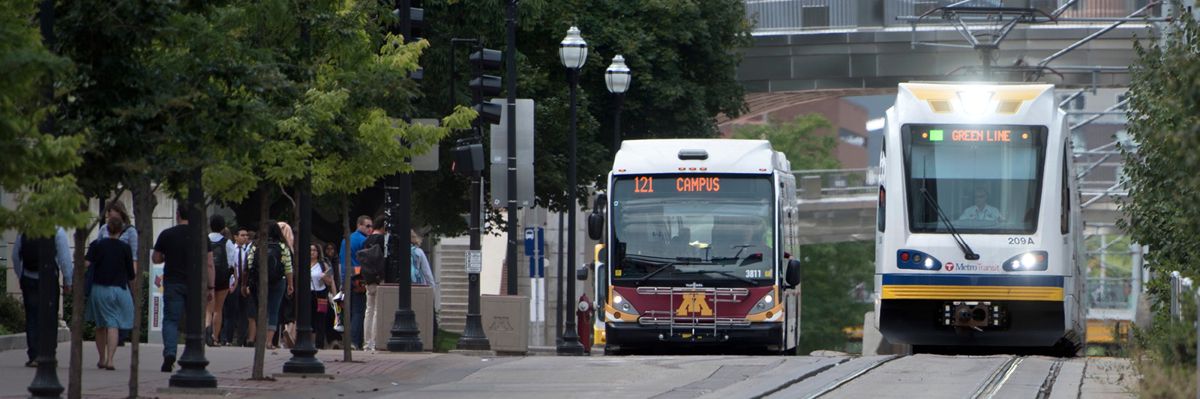
Campus connector buses between East Bank, West Bank, and St. Paul campuses with real-time tracking
Student parking contracts, daily parking, and U Card access to parking facilities
511 Washington Ave SEUnderground pedestrian tunnel and skyway system connecting major East Bank buildings — climate-controlled routes during Minnesota winters.
East Bank CampusBike infrastructure including secure parking, repair stations, and Nice Ride bike-share docks for trips around campus and Minneapolis.
East Bank CampusTypical pay 4 years after graduating. Top 6 of 87 bachelor's majors with published pay.
Source: College Scorecard, field-of-study data.
5 things worth doing early
Minnesota charges undergraduates a flat rate once you cross thirteen credits. One Stop puts the other half of it plainly: "If you take fewer than 13 credits, you'll be charged per credit." At 13 and above, it is one price, and any credits beyond 13 come at no additional charge. The 2026-27 resident numbers make the maths obvious: $644.00 per credit, or a $8,372.00 flat rate at 13+ credits. Thirteen times $644 is $8,372 exactly — so the flat rate IS thirteen credits' worth of tuition, and the fourteenth onward costs nothing. The university's reason for the policy is four-year graduation: 15 to 16 credits a semester gets you to 120 credits in four years. The practical version is that a student sitting at 13 credits is paying the same as the student sitting at 16. Two honest caveats before you load up. The flat rate is TUITION — course fees attached to particular classes are separate and do scale. And credits you cannot actually carry are not free in any sense that matters; a withdrawal or a bad grade costs more than the credit would have.
The Twin Cities campus is one of the largest urban campuses in the country and spans five miles east to west, across the East Bank, the West Bank and St. Paul. In a Minnesota January that is a problem, and the university solved it decades ago. Parking & Transportation Services: "The Gopher Way is your way to navigate through the tunnels and skyways that connect our campus." It is a signed network — tunnels underground, skyways above the street — maintained by Facilities Management. The line that makes it a tip is in their own list of Gopher Way tips: "Use your U Card — Try using your U Card at a locked door." A door that looks shut to a visitor is frequently not shut to you. Their other advice, which is worth taking: plan the route on the Gopher Way map before you rely on it, do a dry run first, allow extra time, and expect routes to "change to different floors within the same building or pass through uncommon areas." It is not a straight line. Access and hours vary building by building rather than across the system, and disability access varies too — check the campus accessibility map for a specific door rather than assuming.
Department of Public Safety: "Gopher Chauffeur is a free service that provides safe rides for University of Minnesota Twin Cities students." Not discounted. Free. Hours are 7:00 PM to 1:00 AM, and the service "operates 7 days a week, year-round, except during University holidays, winter break, and spring break." The service area is on and adjacent to campus; there is a boundary map. You need to be a University of Minnesota student, and you book it through the Gopher Chauffeur ride-request page, signed in with your UMN credentials — pickup, drop-off, number of passengers, confirm. There is an ADA wheelchair-accessible van. The drivers are University Security employees, mostly Student Security Monitors, in black polos and high-visibility security jackets — so you know what you are getting into before it pulls up. It was founded by students in 2007 and has been running ever since.
If you are from Wisconsin, North Dakota or the province of Manitoba, you can pay something equivalent to the Minnesota resident rate rather than the non-resident one. One Stop: "The University has reciprocity agreements with Wisconsin, North Dakota, and the province of Manitoba, Canada." And then the sentence this whole tip exists for: "Tuition reciprocity is not automatic." You apply through your OWN state or province's higher education office — not through the University of Minnesota. Nobody at the U does it for you, and the difference between resident and non-resident tuition is not a rounding error. Do it early; it is paperwork with a processing time, not a checkbox at registration. SOUTH DAKOTA IS NO LONGER ON THE LIST, and this is the part people get wrong because older pages and older siblings both say otherwise. The South Dakota Board of Regents ended the agreement after 2023-24. Continuing students, and students who started in fall 2024 or spring 2025, are being honoured at resident-equivalent rates while they keep making continuous degree progress — but from fall 2025 every NEW South Dakota student is assessed the non-resident rate.
Attach a PDF — a textbook chapter, a lecture deck, a reading, a problem set — and ask Gus about it in plain language. It reads the file, indexes it against the rest of that course's materials, and answers from the page rather than from the internet. It is not only a lookup tool. Ask it to tutor you through something that has not clicked, to quiz you on the key concepts, or to read your draft and tell you what is weak. Because it is scoped to one course, "what is actually on our reading list" is a question it can answer. And it is still the same app that pulls every deadline out of your syllabi and records your lectures. The chat just knows about all of it.
The transit pass, which we have stopped putting in videos
Students who pay the Transportation Fee get "unlimited access to the regional transit system in the Twin Cities metro area" through the Universal Transit Pass. It is one of the more generous versions of this that exists at any school. It is not in the video only because a free-transit tip has now run in four of these, and repeating it stops being useful information and starts being filler.
Parking & Transportation — Universal Transit PassThe Bell Museum is free for you. The planetarium is not
Bell Museum gallery admission is listed as Free for "UMN Student (with student ID)". Planetarium shows are a separate $5 for students, and the museum-plus-planetarium combo is $5. Worth knowing before you turn up expecting the show to be included. The Weisman Art Museum is a different case: gallery admission there is always free to EVERYONE, so it is a nice thing about campus rather than a student perk you would otherwise miss.
Bell Museum — plan your visitWeisman Art MuseumGus is not affiliated with, endorsed by, or sponsored by the University of Minnesota Twin Cities. Tips checked against Minnesota's own pages in September 2026. Campus info last updated May 2026. Stats from the U.S. Department of Education College Scorecard. Something out of date? hello@meetgus.app · All campus guides