Getting around
Rutgers Campus Bus System
Free bus system connecting all four New Brunswick/Piscataway campuses
The student guide to New Brunswick, New Jersey: where to eat, live and get help, what a year really costs, and the free stuff most students miss.
Source: U.S. Department of Education, College Scorecard.
After grants and scholarships, by family income. Average: $24,897.
Getting around
Free bus system connecting all four New Brunswick/Piscataway campuses
Health & safety
Free confidential mental health counseling, crisis support, and psychiatric services
Places
Art museum with extensive collections including Soviet nonconformist art, free admission
Dining halls, quick bites and coffee on campus.

Modern food hall in College Avenue Student Center replacing Brower Commons
126 College Ave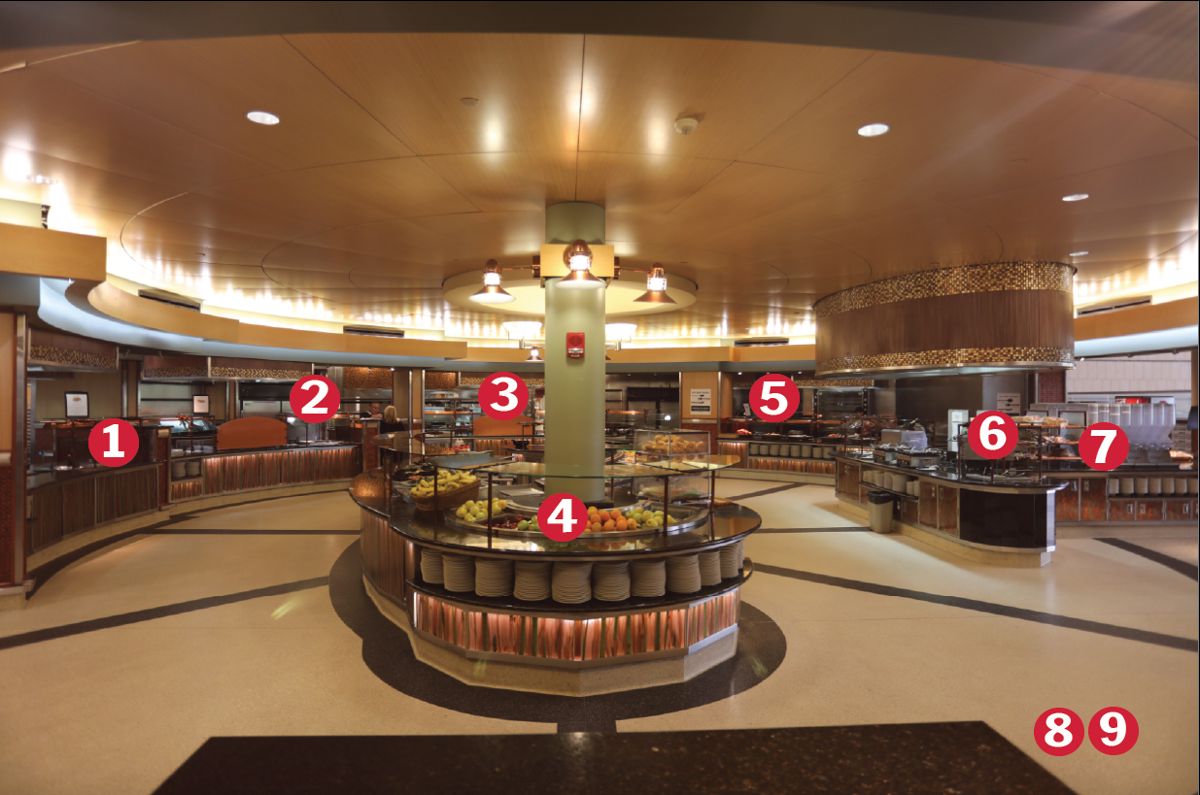
Newest dining hall with multiple dining rooms, The Pub, and fireplace seating
Livingston Campus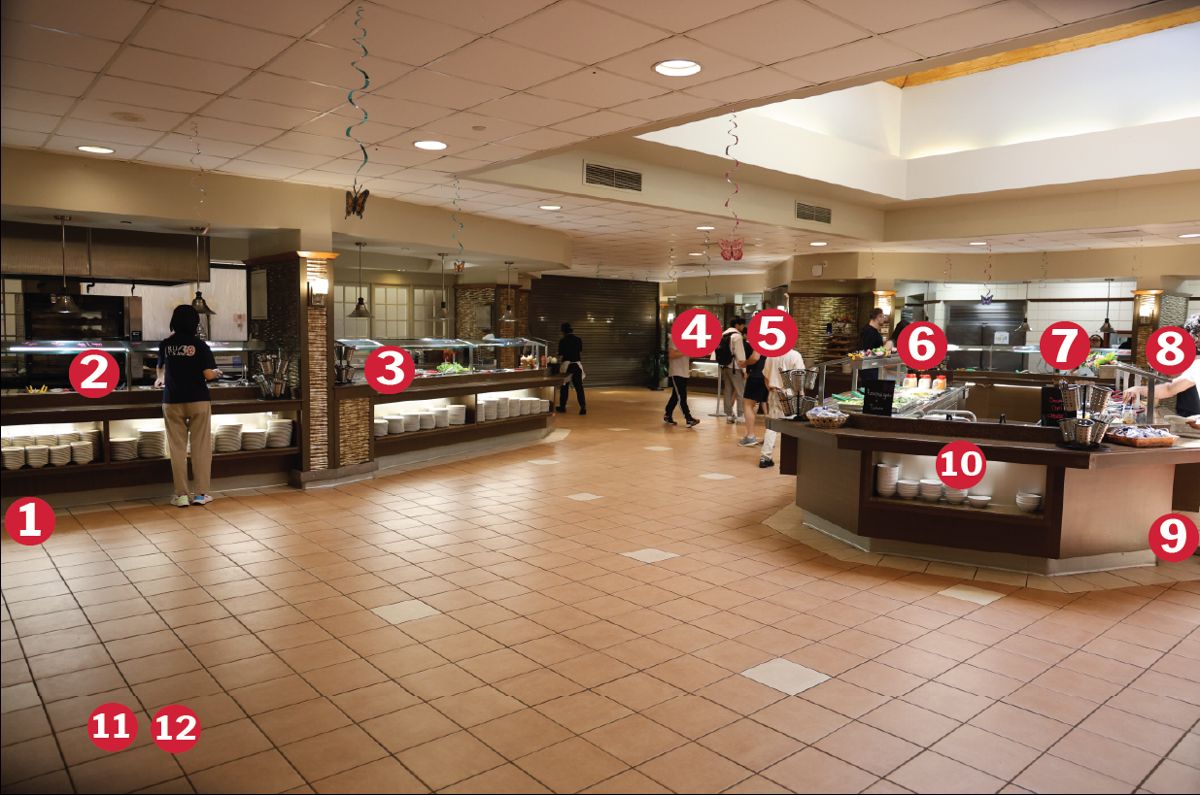
All-you-can-eat dining with sushi bar, noodle bar, and rotisserie on Busch Campus
Busch Campus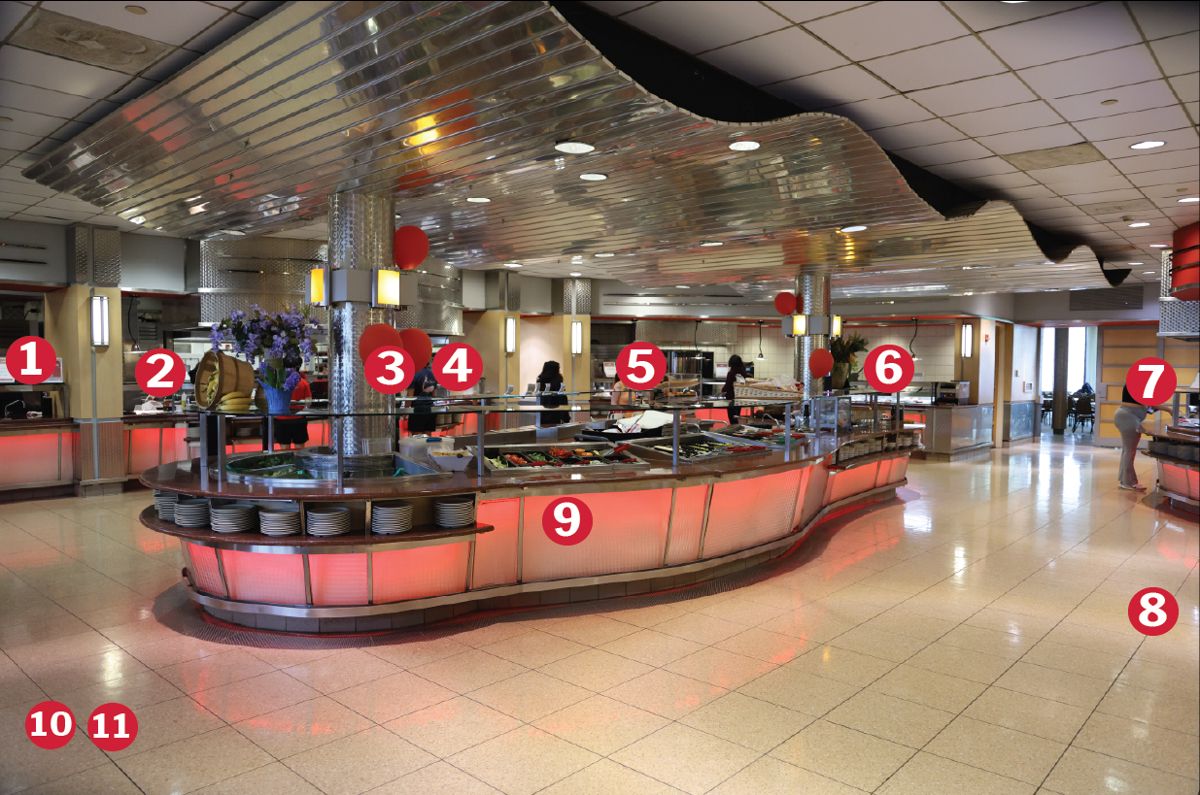
Dining hall with two separate rooms on Cook/Douglass Campus
Cook/Douglass CampusDiverse menu with daily specials on College Avenue Campus
College AveStarbucks inside Alexander Library on College Avenue, perfect for coffee while studying.
169 College Ave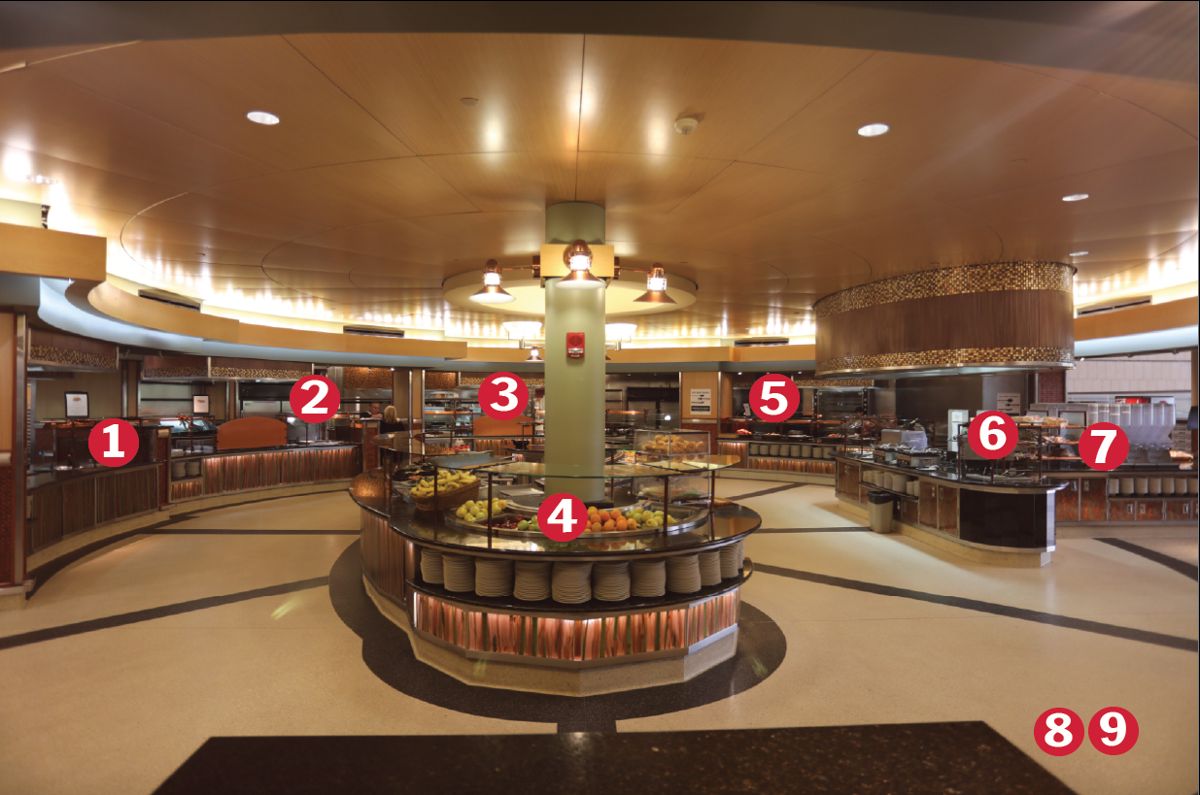
Custom burgers and milkshakes on Livingston Campus
Livingston Campus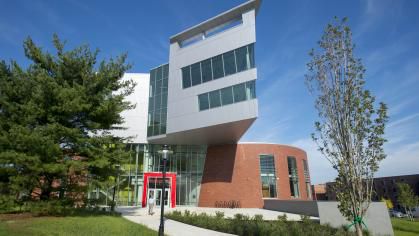
Convenience store with hot and cold foods and grocery items on Livingston Campus
Livingston Campus
Whole, minimally processed scratch-cooked food on Cook/Douglass Campus
Cook/Douglass CampusChick-fil-A location in the Livingston Student Center, one of the most popular spots on campus.
84 Joyce Kilmer AveFull Starbucks menu with handcrafted coffee, tea, sandwiches, and pastries on Livingston Campus
105 Joyce Kilmer Ave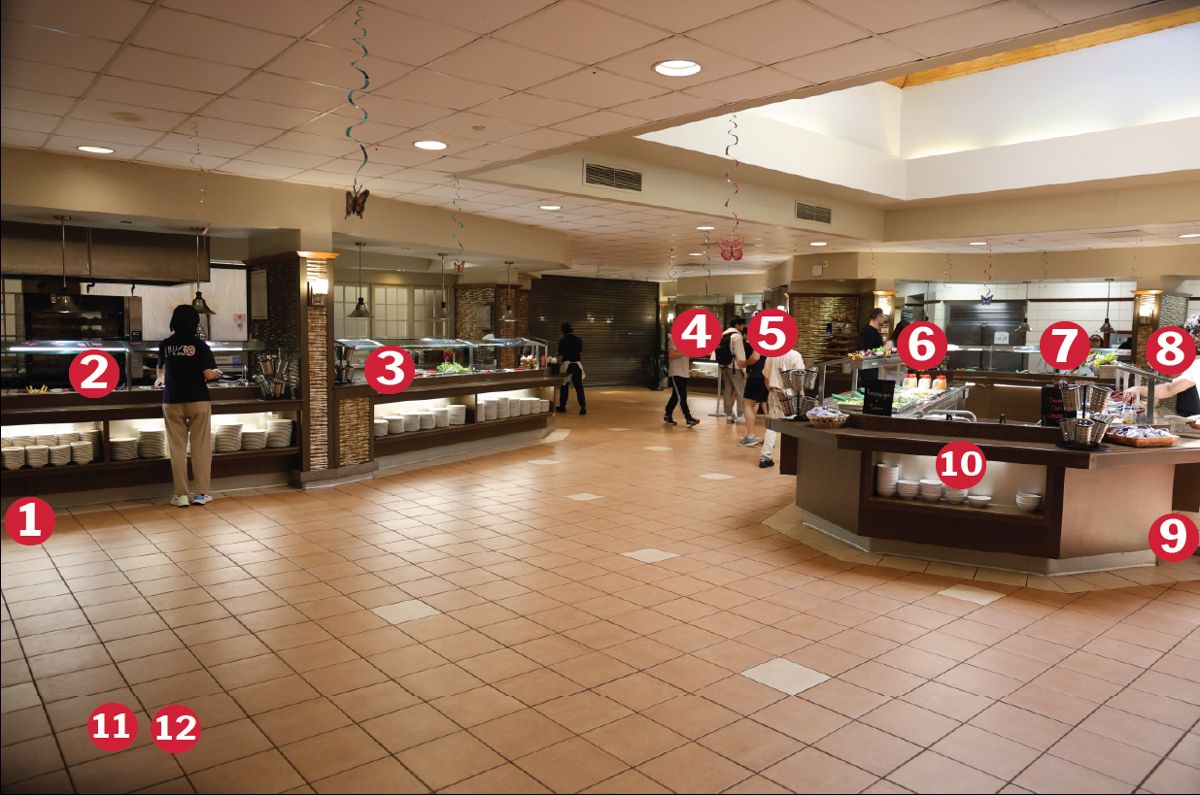
Hot and cold meals with pastries and coffee on Busch Campus
Busch Campus
Meals and snacks on Cook/Douglass Campus
Cook/Douglass CampusFreshly baked bread, soups, salads, sandwiches, and pastries in the College Avenue Student Center
126 College AvenuePizza, salad, and pasta in the Livingston Student Center
Livingston Student CenterPizza and Italian quick-service restaurant on Busch Campus in the student center.
604 Bartholomew RdSit-down dining venue on Livingston Campus for special occasions
Livingston CampusBreakfast, lunch, and dinner options with beverages and pastries at the Douglass Student Center
100 George Street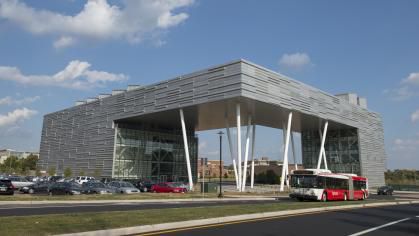
Specialty pizzas and paninis on Busch Campus
Busch CampusResidence halls, apartments and help finding a place.
Traditional residence halls in the heart of New Brunswick including Brett, Clothier, Demarest, and Hardenbergh
College Avenue
Historic residence halls on College Avenue Campus in downtown New Brunswick
College AveSuite-style living near science and engineering buildings including Busch Suites, Best, and Metzger halls
Busch Campus
Modern apartment-style housing on Livingston Campus in Piscataway
Livingston Campus
Residence halls near STEM facilities on Busch Campus in Piscataway
Busch CampusQuads and modern apartments with kitchens, central plaza dining, near recreation center and student center
Livingston CampusQuieter residential halls including Katzenbach, Voorhees, Perry, and Newell Apartments near green spaces
Cook/Douglass Campus
Dedicated housing for Honors College students on College Avenue
65 Union StResidence halls on Cook/Douglass campus with a quieter atmosphere, gardens, and close to Neilson Dining.
Shuttles, parking and accessible rides.

Free bus system connecting all four New Brunswick/Piscataway campuses
Free intercampus bus system connecting all four New Brunswick/Piscataway campuses
All campuses, New Brunswick/Piscataway, NJ
Student and visitor parking lots and garages across all campuses
Student and employee parking permits across all campuses with commuter and resident options
New Brunswick, NJLate-night shuttle service between campuses when regular buses stop, requires Rutgers ID
All campuses, New Brunswick/Piscataway, NJBike registration, repair stations across campuses, and cycling resources through TravelSmart
New Brunswick, NJNJ Transit Northeast Corridor Line station near College Avenue Campus
Albany StManages student parking permits, campus lots, and garages across all campuses — register via rudots.rutgers.edu.
Campus bike rental program managed by DOTS with bikes available at locations across campus.
Campus bike share program for getting around between campuses
Various stations across campusesNJ Transit train station in New Brunswick connecting to NYC, Trenton, and beyond
New Brunswick Station, Albany St25% discount on NJ Transit monthly rail, bus, or light rail passes for full-time students — purchase online.
Typical pay 4 years after graduating. Top 6 of 74 bachelor's majors with published pay.
Source: College Scorecard, field-of-study data.
4 things worth doing early
From the School of Arts and Sciences advising FAQ, answering the exact question every freshman asks in August — can you override a travel conflict for a class on another campus that starts 30 minutes after this one ends? No. It is "a New Brunswick-wide mandate requiring 40 minutes of travel time between classes on different campuses, with no overrides, regardless of the mode of transportation or instructor approval." Why that bites: the standard 80-minute class periods start at "8:30am, 10:20am, 12:10pm, 2:00pm, 3:50pm, 5:40pm, 7:30pm, and 9:20pm" — thirty minutes apart. So two consecutive standard periods on two different campuses is the one schedule WebReg will not build, and the professor cannot help you. The two exceptions: "30-minutes of travel time is permitted between College Ave & Downtown New Brunswick and also between Busch & Livingston." The practical version: build each day on one campus where you can, and treat Busch/Livingston and College Ave/Downtown as pairs. The bus that makes it possible at all is free — "You do not have to pay a fare to ride the bus" — and runs Monday to Thursday 6:00am to 3:30am and around the clock Friday through Sunday, with the Knight Mover covering the 3:00am to 6:00am gap. Track it on TripShot. It does not go to Newark or Camden; that is the NJ Transit Northeast Corridor.
This is the School of Arts and Sciences guideline, and it is the opposite of what most big universities do. When an SAS student repeats a course, "for up to 16 credits/four courses, the grade of F or D will be removed from the cumulative grade-point average." The first grade does not vanish from the record: "The original grade of F or D will remain on the transcript with an E prefix" — no degree credit, not in the GPA — and "the repeated grade will have an R prefix", which earns the credit and computes. The fine print. It applies once per course, "only at Rutgers University-New Brunswick". "If the student earns an F or D a second time, only the second grade will enter the cumulative grade-point average." It "may not be applied to punitive grades of F given for reasons such as academic dishonesty." And it only runs one direction: "When students earn a grade of C or better and choose to repeat the course, it must be repeated for E credit" — meaning no graduation credit and no GPA effect, so retaking a C to chase an A does nothing. Two more things. The prefixes are applied "by the end of the semester during which the repeated course has been taken", so a Dean's List calculation cannot be fixed retroactively. And this is an SAS rule — if you are in SEBS, the business school or Engineering, ask your own dean's office before you count on it.
"Byrne Seminars are small, one-credit courses, limited to 20 students." They are "available exclusively to first-year undergraduate students at Rutgers–New Brunswick", they "are graded Pass/No Credit and have no formal exams", and the format is fixed: "Courses must meet for 1.25 hours once per week for 10 weeks, or for 2.5 hours once per week for 5 weeks." A professor picks a topic they actually care about and twenty freshmen sit at one table with them. There are roughly eighty across fall and spring — the catalog page lists them — and the mechanics are ordinary WebReg: subject code 090, course number 101. Fall sections are picked during summer advising or in Add/Drop week; spring sections through WebReg any time. A seminar needs ten students to run. Why it belongs in the first week: it is the cheapest way to meet a faculty member in your possible major before you have to declare anything, it is a pass/no-credit credit toward the twelve you need for full-time status, and it is one of the few Rutgers rooms where nobody is anonymous. The pages say nothing about a separate fee, and neither do we.
Chemistry's definition: "An SPN (Special Permission Number) is a 6 digit code that allow students to register for a closed or restricted section." "SPNs are assigned based on seniority, amount of cumulative credits, and availability." Share yours and the department says you will be penalized and refused next time. Computer Science: "Please DO NOT register for a Special Permission Number before a class fills up. The numbers are not given by first come first serve. They are given by round." "A Special Permission Number will not get you into a course you do not have a prerequisite for." And there is a clock — "Fall SPNs requests will only be active until the end of the first week of classes (9/04/26). We will not accept any requests past that date." Intro CS (01:198:170) gives out none at all: "The classes are filled to lab room capacity." Mathematics runs rounds too, only during "the special permission period, beginning shortly before the term and ending during the first week of classes", and adds the trap: "If you receive an email informing you that your request has been granted, you must login within 3 days of when the email is sent in order to retrieve your special permission number." Miss the email, lose the seat. Missing a prerequisite is a different form — a prerequisite override, not an SPN. Each department writes its own rules; Physics folds both requests into one form.
Attach a PDF — a textbook chapter, a lecture deck, a reading, a problem set — and ask Gus about it in plain language. It reads the file, indexes it against the rest of that course's materials, and answers from the page rather than from the internet. It is not only a lookup tool. Ask it to tutor you through something that has not clicked, to quiz you on the key concepts, or to read your draft and tell you what is weak. Because it is scoped to one course, "what is actually on our reading list" is a question it can answer. And it is still the same app that pulls every deadline out of your syllabi and records your lectures. The chat just knows about all of it.
Placement tests: 30 days from your offer, and they decide your first schedule
First-years complete placement testing within "30 days of accepting their offer of admission to Rutgers"; once you start, the remaining tests must be done "within 72 hours". "Tests are not scored as pass or fail, and results do not affect admission or academic standing at Rutgers." Only the math test "may be taken up to two times". If your schedule shows 355:005 or 640:005, that placeholder means a test is still owed — and "Math and English placement tests are required for students to remain enrolled at SAS."
Learning Centers — testing and placementSAS FAQ — what "needs placement" meansDay ten, week eight, and the credit caps
Left off the video because the drop-deadline shape has run in this series twice this month. "All undergraduate students may add or change courses during the first ten calendar days of the semester. The last day for all undergraduate students to drop a course without receiving a 'W' is also the tenth calendar day of the semester." After that, "through the eighth full week of the term", a drop earns a W. SAS credit load: at least 12 to stay full-time; "up to 19 credits during the preregistration period", up to "20.5 credits during the add/drop period"; on Warning or Probation, "a maximum of 16 credits".
Registrar — enrollment and registrationSAS Advising — course loadEveryone enters undeclared, and there is a senior-year hold
"All incoming students enter Rutgers undeclared." "Full-time students normally declare their major in the second semester of their second year"; part-time students "by the time they have completed 60 credits." The warning: "Students who have not declared their major and minor by the second semester of their third year may not be able to complete all requirements and, thus, not graduate on time." And on the registration-holds list: "Undeclared major going into the senior year." Declare at mymajor.sas.rutgers.edu. (Left off the video because UW ran the pre-major shape the day before.)
SAS Advising — completing a major and a minorSAS Advising — major declarationSAS Advising — registration blocks and holdsThe meal plan you must buy, and the RU Express account that expires
"First-year students living in residence halls are required to minimally have a 210 Meal Plan" — $3,532 a semester for 2026-27 (the 150 Plan for returning residents is $3,337; Scarlet Unlimited is $3,918). You may use "10 of their meals for their guest(s)" a semester and up to "three (3) meal swipes per day" at retail and takeout. Unused fall meals "will automatically roll over to the Spring semester within the same academic year if the student purchases the same meal plan or a higher-tier meal plan" — downgrade and they are gone. RU Express is "the official university debit account", good at "Over 100 on-campus and off-campus locations"; the balance rolls over, but an account with no activity for 18 months is closed and the money forfeited, and refunds come only on graduation, withdrawal or dismissal.
Rutgers Dining — meal plansRutgers Dining — RU ExpressAlready paid for: the Learning Centers, five gyms, and Microsoft on five devices
The Learning Centers provide "free academic support services" — "academic support for students in over 50 courses", peer tutoring, study groups, academic coaching and writing tutoring at "four Rutgers–New Brunswick campus locations and online", booked through Penji. Recreation: "Rutgers Students (who are enrolled in the current semester and have a paid Campus Fee)" have membership at "all five of our recreation/fitness centers in New Brunswick" plus the fitness classes. Software, per the IT student guide: "Current Rutgers students get free access to Microsoft Office products, including Word, Excel, PowerPoint, and more, on up to five devices." The same guide says Rutgers "provides free access to Premiere, Photoshop, Illustrator, After Effects, Acrobat, and many more Adobe apps and tools", though one school's IT page lists Adobe as a discount instead — check software.rutgers.edu with your NetID before you buy anything.
Rutgers Learning CentersRutgers Recreation — membershipRutgers IT — student tech guideGus is not affiliated with, endorsed by, or sponsored by Rutgers University–New Brunswick. Tips checked against Rutgers's own pages in September 2026. Campus info last updated September 2026. Stats from the U.S. Department of Education College Scorecard. Something out of date? hello@meetgus.app · All campus guides