Academics & admin
University Writing Center
Free one-on-one writing consultations for any UT student on any writing project at any stage
The student guide to Austin, Texas: where to eat, live and get help, what a year really costs, and the free stuff most students miss.
Source: U.S. Department of Education, College Scorecard.
After grants and scholarships, by family income. Average: $18,554.
Academics & admin
Free one-on-one writing consultations for any UT student on any writing project at any stage
Getting around
Free with valid UT ID for all CapMetro buses, MetroRail, MetroRapid, and UT Shuttle routes connecting student neighborhoods to campus
Health & safety
Free mental health services including individual counseling, group therapy, psychiatry, MindBody Lab, and 24/7 crisis line
Academics & admin
Free tutoring, learning specialist appointments, study skills workshops, and peer-led study groups
Dining halls, quick bites and coffee on campus.
South-campus flagship dining hall in Jester Center with multiple stations including a top-9 allergen-free line
201 E 21st St, 2nd Floor Jester Center
All-you-care-to-eat dining hall on the ground floor of Jester Center with rotating food stations.
201 E 21st St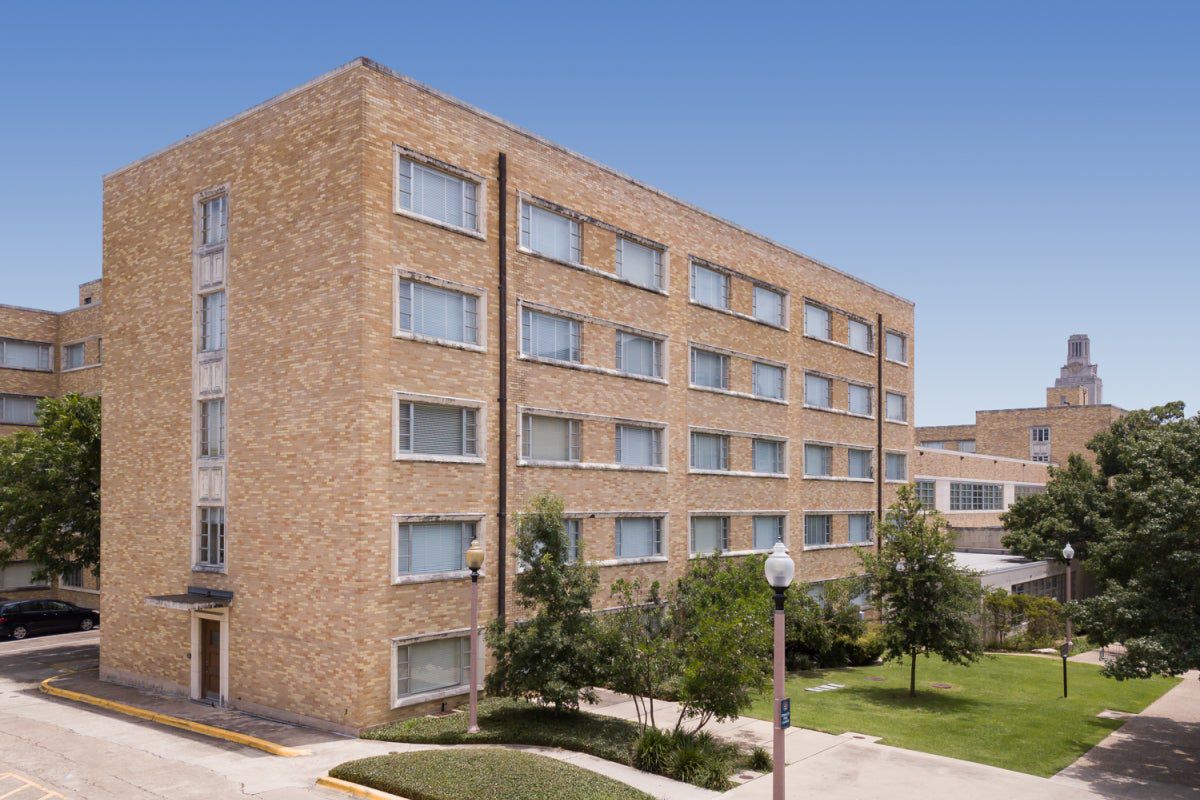
Northwest-campus dining hall in Kinsolving with several serving lines and outdoor patio seating
2605 Whitis Ave, Kinsolving Hall
Versatile south-campus dining experience on the ground floor of Jester Center
201 E 21st St, Jester Center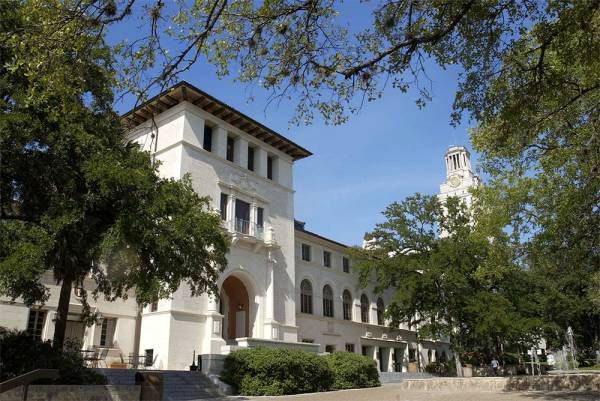
Main union food court with Panda Express, Chick-fil-A, Tower Burgers, and Shake Smart
2308 Whitis Ave, Texas Union
Diverse food court with Chick-fil-A, One Two Three Sushi, and Sabor Tacos y Más
2201 Speedway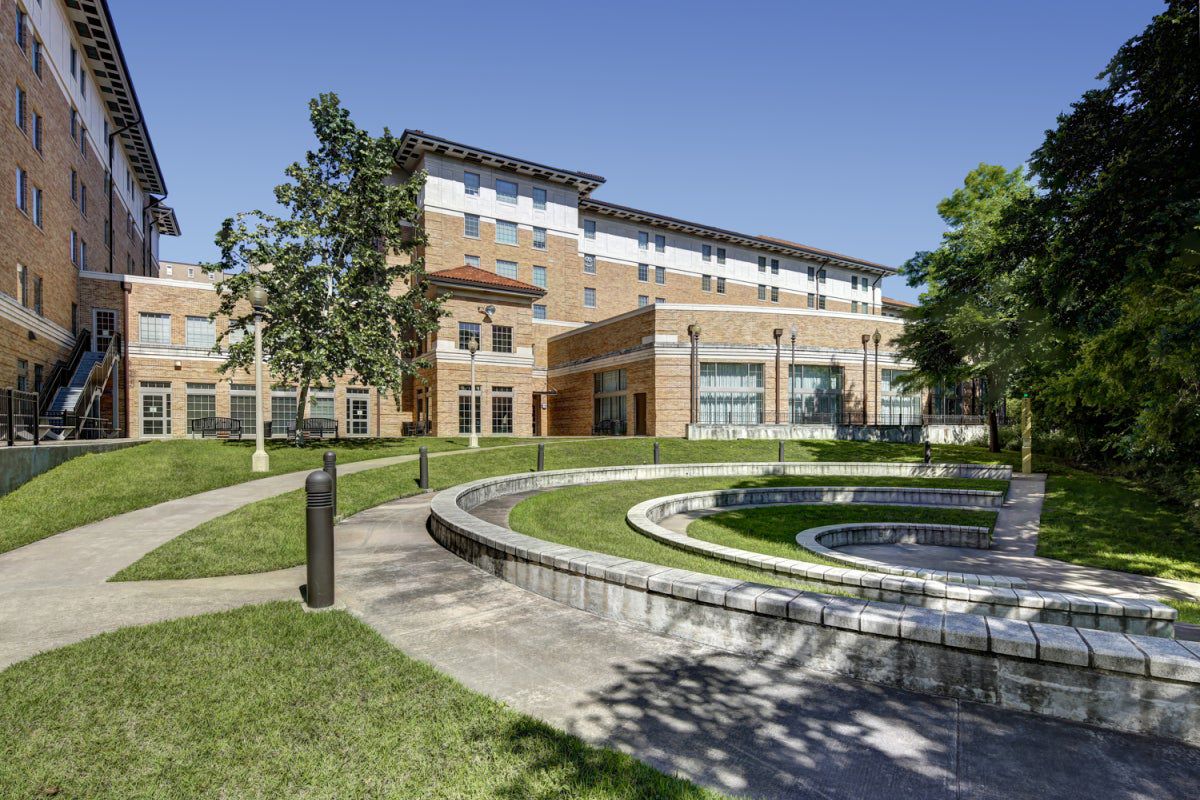
Combo grill and coffee shop serving residents of San Jacinto Hall
309 E 21st St, San Jacinto Hall
Build-your-own pizza restaurant inside Jester Center with late-night hours.
201 E 21st St
Bistro-style dining with grab-and-go, Starbucks coffee, and fresh pastries near Littlefield Hall
2503 Whitis AveSelf-serve customizable ramen bar in the Texas Union with various broths, noodles, and toppings.
2308 Whitis Ave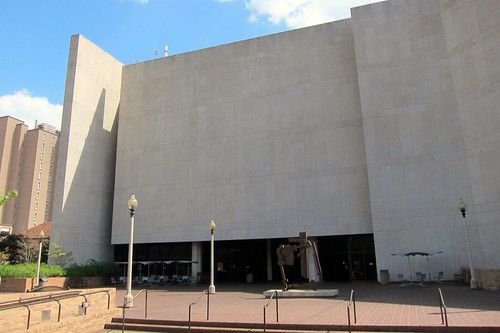
Starbucks beverages, pastries, and quick bites with outdoor seating next to PCL library
101 E 21st St, PCL Library
Classic burger joint in the Texas Union serving burgers, fries, onion rings, and milkshakes.
2308 Whitis Ave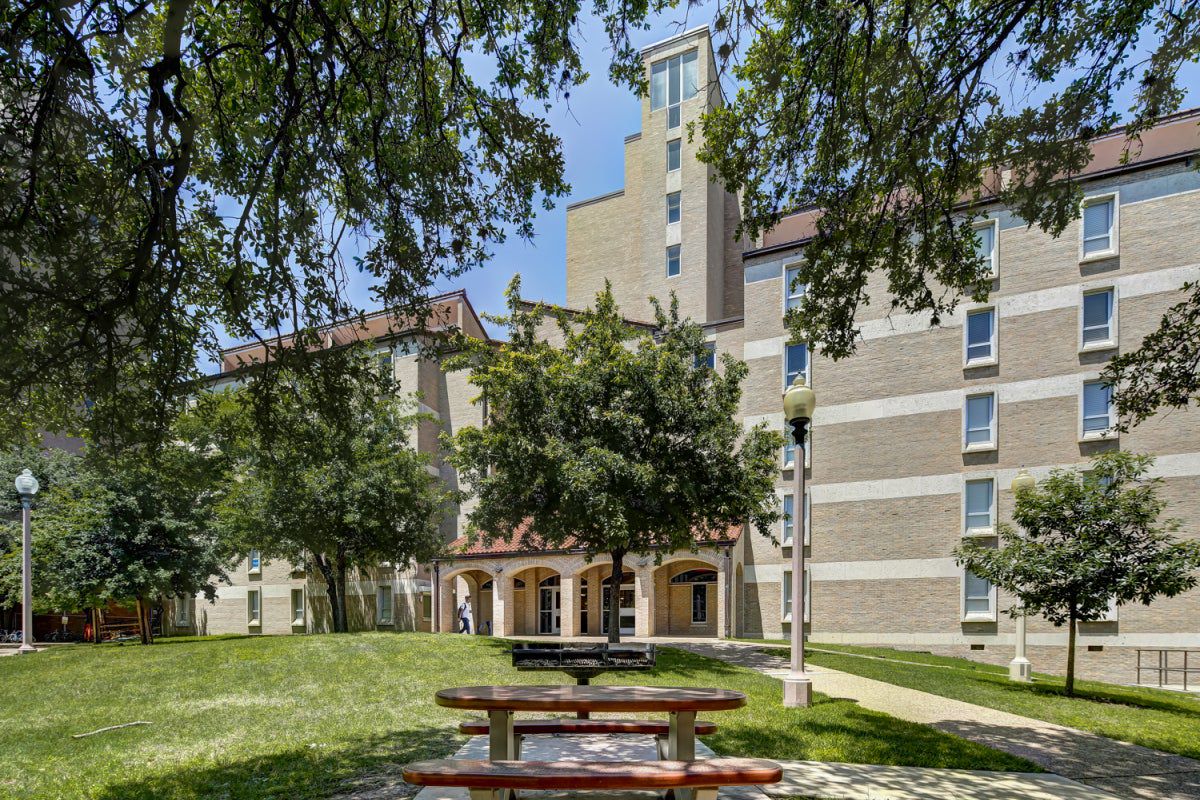
Breakfast tacos, Starbucks coffee, and baked goods on the south side of campus in Jester
201 E 21st St, Jester Center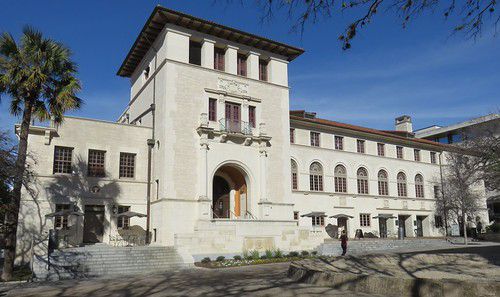
Starbucks coffee, bakery items, and grab-and-go selections in the Texas Union
2308 Whitis Ave, Texas Union
Starbucks coffee shop in the WCP Student Activity Center with beverages and bakery items.
2201 Speedway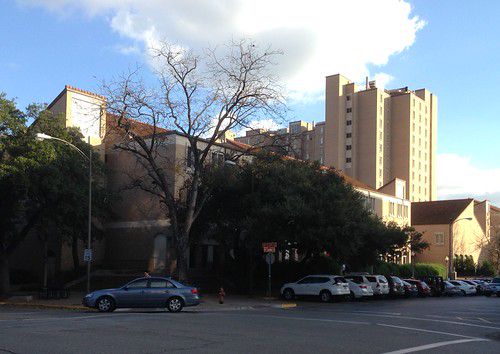
Grab-and-go meals, snacks, beverages, and essentials on the ground floor of Jester Center
201 E 21st St, Jester Center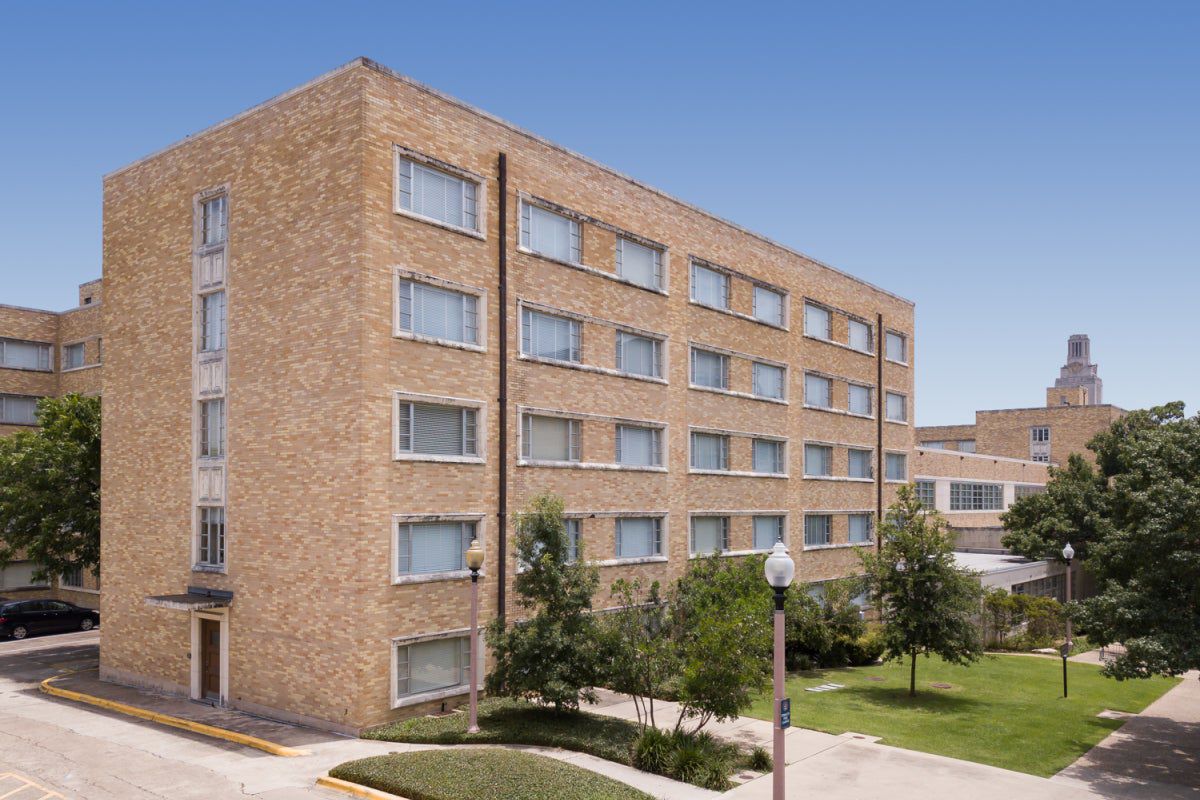
Groceries, grab-and-go meals, and sundries inside the Kinsolving Hall lobby
2605 Whitis Ave, Kinsolving Hall
Convenience market in Kinsolving Hall with groceries, fresh produce, prepared meals, and sundries.
2605 Whitis AveResidence halls, apartments and help finding a place.
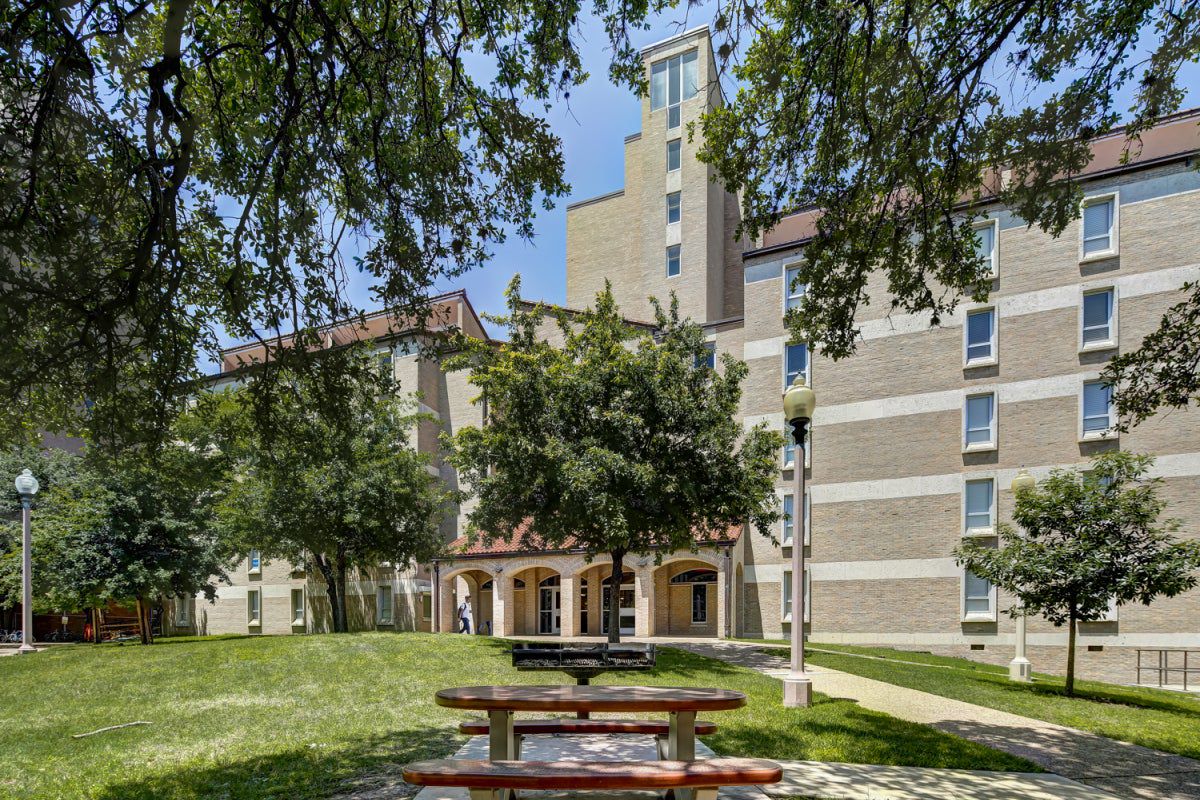
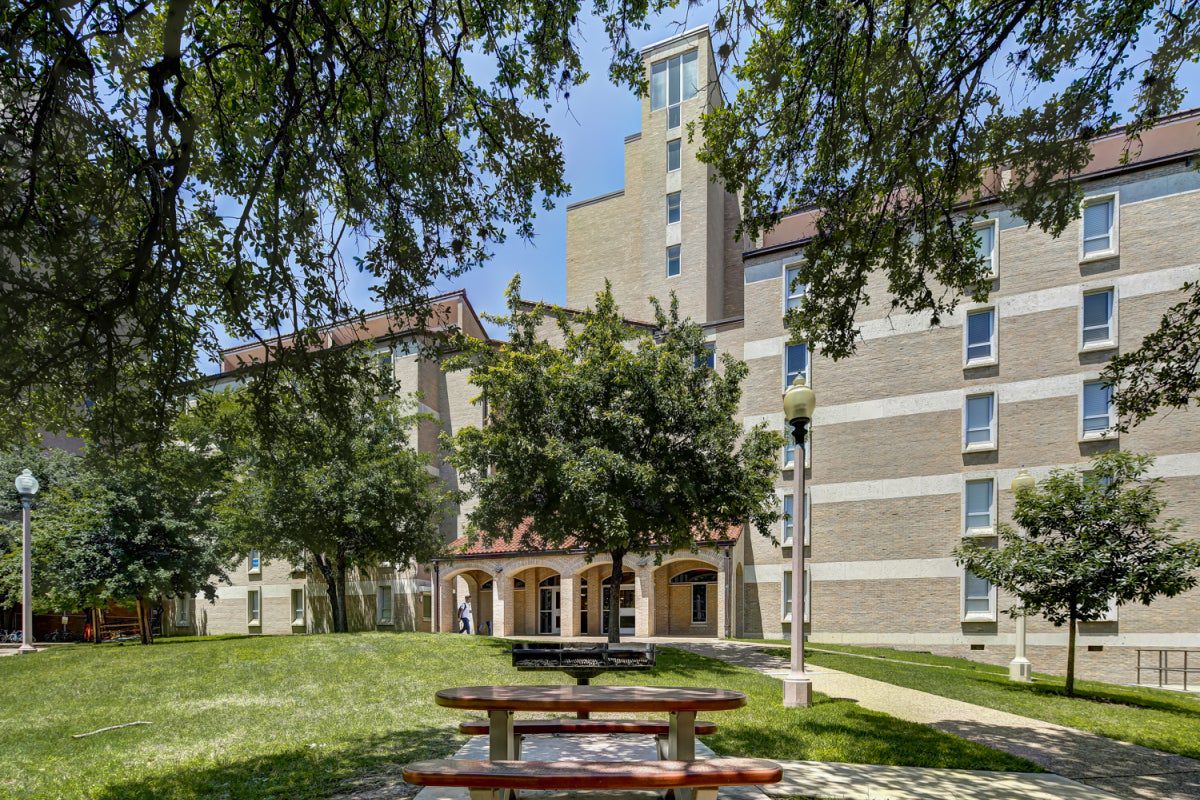
Largest residence hall housing ~2,800 students with dining, market, and Sanger Learning Center inside
201 E 21st St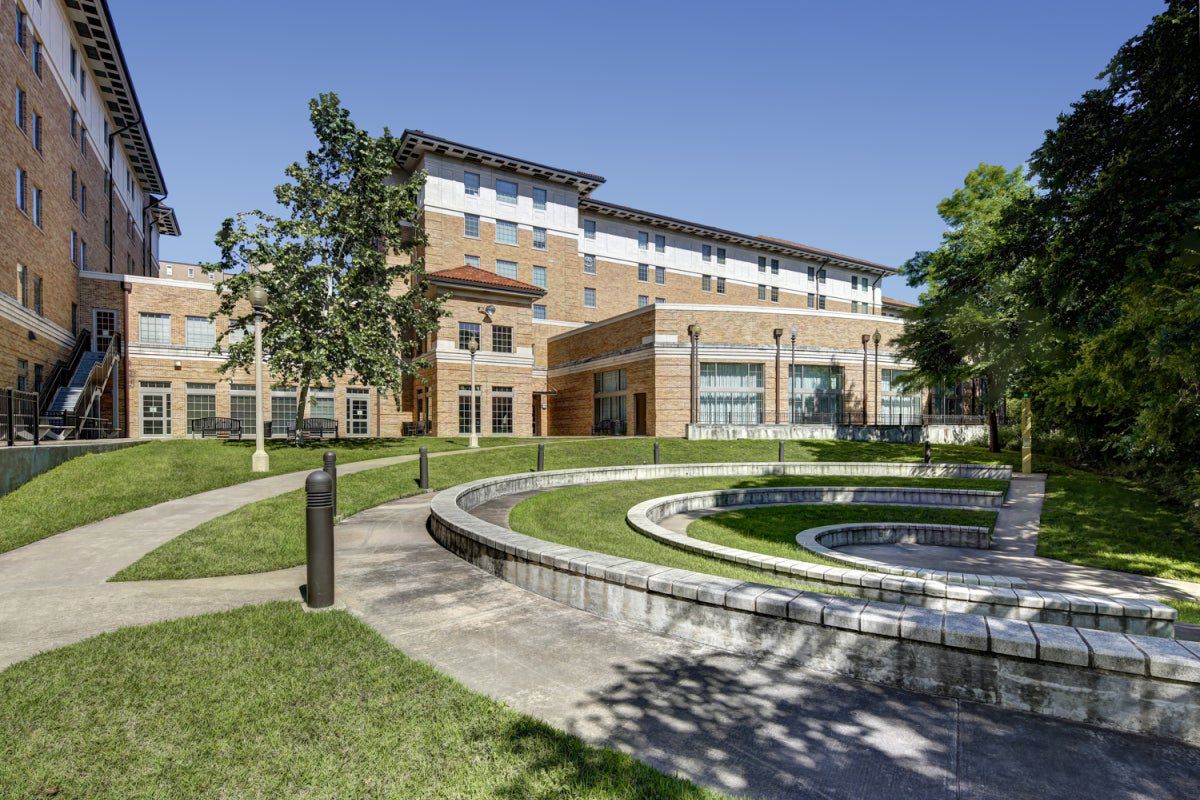
Suite-style hall housing ~800 students with shared baths, near the LBJ Library and stadium
309 E 21st StModern suite-style residence hall housing ~900 students with Cypress Bend Cafe on the ground floor.
309 E 21st StApartment-style upperclass housing with private/shared bedrooms, full kitchens, and living areas
2610 Whitis AveHistoric Andrews, Carothers, and Blanton residence halls near Texas Union and Speedway Mall
2401 Whitis AvePrivate residence hall on the Drag with furnished apartments, rooftop pool, and retail.
2021 Guadalupe St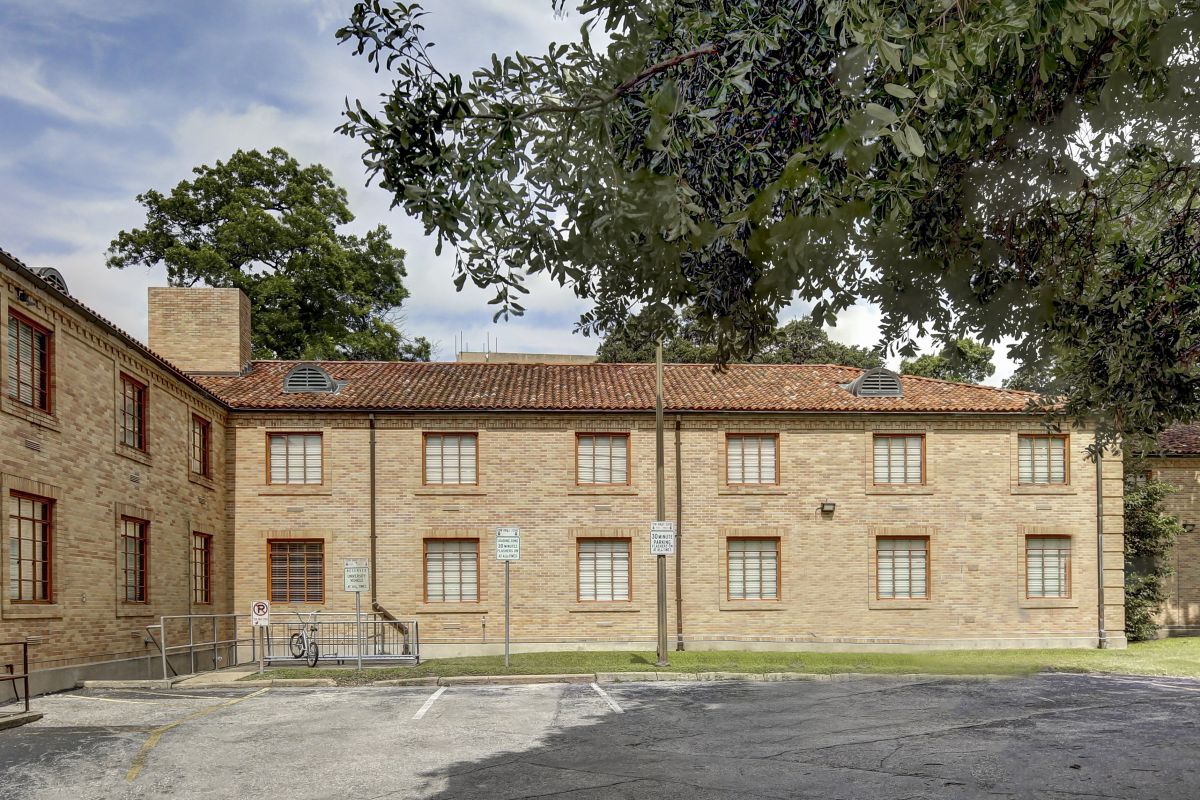
Modern residence hall near Waller Creek with single-occupancy rooms, popular with upperclassmen
2500 San Jacinto Blvd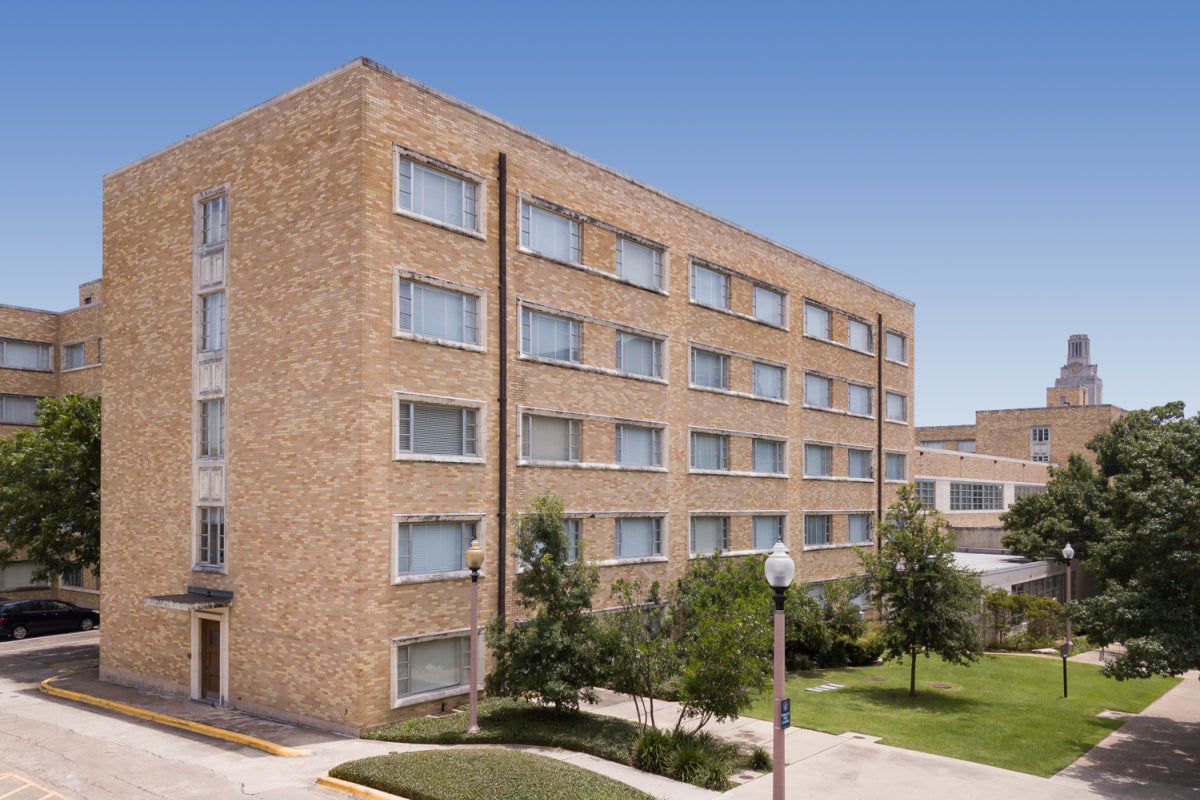
Historic residence hall on the north side of campus with traditional double rooms and in-hall dining
2605 Whitis Ave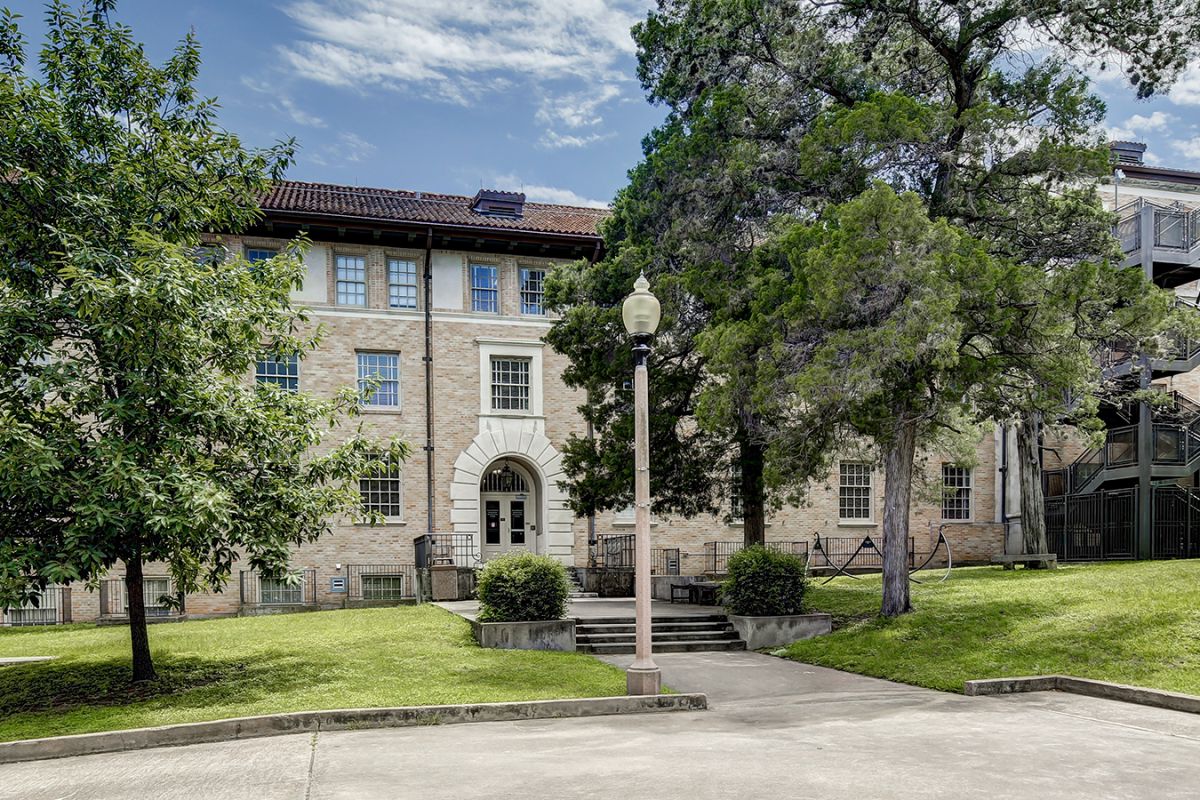
Centrally located residence hall near the Main Mall with easy access to academic buildings
2401 Whitis AveShuttles, parking and accessible rides.
Free with valid UT ID for all CapMetro buses, MetroRail, MetroRapid, and UT Shuttle routes connecting student neighborhoods to campus
Austin, TXFree campus shuttle with 7+ routes connecting campus, housing, and parking areas.
Austin public transit offering free bus and rail rides for UT students with valid ID.
Free bike registration, on-campus bike repair stations, and discounted student MetroBike memberships across Austin
Austin, TX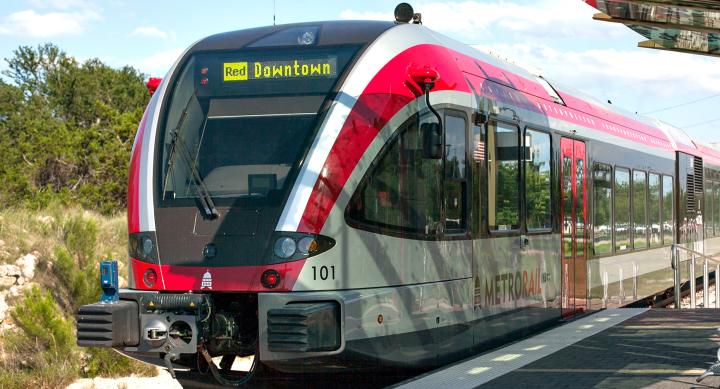
Commuter rail from Leander to downtown Austin, free for UT students with valid ID
Free late-night weekend shuttle between campus, West Campus, Riverside, and the entertainment district
Campus parking permits, garages, surface lots, special event parking, and alternative transportation programs
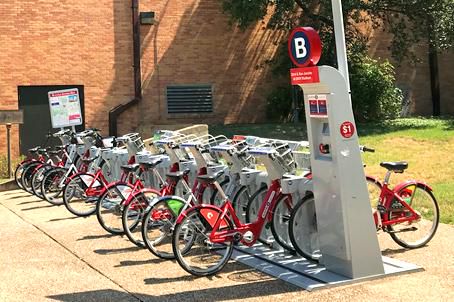
Campus bike share with 7+ stations on and near campus, $12/year for UT students
Bike share system with campus stations. Student rate $30/year for unlimited rides.
Typical pay 4 years after graduating. Top 6 of 59 bachelor's majors with published pay.
Source: College Scorecard, field-of-study data.
4 things worth doing early
The Texas Advance Commitment, in the university's words: "Texas residents entering UT Austin as freshman or transfer students, as well as continuing students with family-adjusted gross incomes (AGIs) of up to $100,000, will have tuition covered with gift monies up to tuition. Students with family AGIs between $100,000 and $125,000 will receive some financial assistance to help offset the cost of their tuition at UT Austin." The $100,000 line is new from fall 2025 — it used to be $65,000, so older advice undersells it. The conditions, all of them: be a Texas resident; submit the FAFSA or TASFA; have demonstrated financial need; be enrolled full-time as a first-time-in-college or transfer student pursuing your first bachelor's degree. There is no separate application — the FAFSA is the application, which is why filing it late is the way people miss this. To renew: "Maintain 2.0 GPA and complete 67% of courses attempted." Freshmen can receive it for up to four years. What it is NOT: it is tuition. Fees, housing, books and food are separate, though the page notes other grant, scholarship, work-study and loan funds exist for those. And "demonstrated financial need" is a real test, calculated from the FAFSA — $100,000 is a ceiling, not an automatic award.
The One-Time Exception is UT-specific and most freshmen have never heard of it until the semester it would have saved. From the General Information catalog: undergraduates "will be allowed to drop a single class or withdraw from the University after the deadline to drop or withdraw for academic reasons under the provisions of the One-Time Exception (OTE). The OTE may be invoked only once during the student's entire university undergraduate program career regardless of the college the student was enrolled in at the time the exception was allowed." Texas One Stop puts it more plainly: "Every undergraduate is allowed one OTE, whether it is used to withdraw from all classes or drop one class. An OTE drop counts as one of your six Q-drops. Once you've used it, you cannot use it again." So it is a real escape hatch — a class going badly in week thirteen does not have to become an F — but it is also a Q-drop, it goes on the transcript as a Q, and it is the only one you get for your whole degree. Ask your advisor before you spend it. The form goes to your dean's office by the last class day; for fall 2026 the regular Q-drop deadline is November 18 and OTE requests are accepted through December 7. It does not apply to graduate, Pharmacy, LBJ School or Law students.
Plenty of schools let a second attempt replace the first in your GPA. UT does not. From the catalog's Repetition of a Course section: "If a student repeats a course and has two or more grades, all grades and all semester hours are used to calculate the University grade point average and to determine the student's scholastic eligibility to remain in school. The official grade in a course is the last one assigned." So the F is still in the average; the retake is added next to it. And in most of the university you cannot even retake a class you passed. The same section: students in "the McCombs School of Business, the Moody College of Communication, the Cockrell School of Engineering, the College of Liberal Arts, the College of Natural Sciences, the School of Nursing, and the College of Pharmacy" may not repeat for credit a course in which they earned a C- or better. The practical version: at UT the time to rescue a grade is DURING the semester — office hours, the Sanger Learning Center, or the One-Time Exception above — not the semester after. This is also the reason tip 4 exists: a repeated course counts twice against the rebate.
From the catalog's Tuition Rebates for Certain Undergraduates: "An undergraduate may be eligible for a tuition rebate of up to $1,000 if, at graduation, they have attempted no more than three semester hours beyond the minimum number of hours required for the degree." It is a state programme, so it exists at every Texas public university — but it is decided by choices you make as a freshman. Because "hours attempted" is a wide net: "all courses the student has undertaken, such as transfer credit, courses the student dropped or from which the student withdrew after the date the official enrollment count was taken, developmental courses taken for credit, optional internship and cooperative education courses, courses the student failed, and courses the student repeated." More than nine hours of credit by exam also counts. A change of major, a Q-drop, one failed class — any of them can put you over three. The other conditions: "The student must have been a Texas resident and must have been eligible to pay resident tuition at all times while pursuing the degree"; you must graduate within four calendar years of first enrolling (five for architecture, engineering and other programmes the state has determined take longer); and you have to ask — "submit a request for a rebate in their dean's office when the student files an application for graduation." The request must be in before the official graduation date. Students on Longhorn Fixed Tuition are eligible for an additional $2,500 rebate on top — see the note below before you read that as a reason to opt in.
Attach a PDF — a textbook chapter, a lecture deck, a reading, a problem set — and ask Gus about it in plain language. It reads the file, indexes it against the rest of that course's materials, and answers from the page rather than from the internet. It is not only a lookup tool. Ask it to tutor you through something that has not clicked, to quiz you on the key concepts, or to read your draft and tell you what is weak. Because it is scoped to one course, "what is actually on our reading list" is a question it can answer. And it is still the same app that pulls every deadline out of your syllabi and records your lectures. The chat just knows about all of it.
Two things people will tell you that are no longer true
"You have to complete six Flags." Not any more. The Skills and Experience Flags requirement was discontinued in April 2025 (the core Writing requirement stays). An older sibling's degree audit is not yours. "Take a class a third time and you pay out-of-state tuition" / "go 30 hours over and you pay non-resident." Texas law ALLOWS a university to do both, and some do. UT's own line: "As of the current academic year, the University does not charge undergraduates additional tuition for an excessive number of hours or for repeated courses." Note the "as of the current academic year" — it is a policy, not a promise.
CNS advising FAQ — Flags discontinuedCatalog — nonresident tuition for resident studentsSix Q-drops, for your whole life, at every public school in Texas
"In accordance with section 51.907 of the Texas Education Code, undergraduate students may drop no more than six classes for academic reasons." It follows you between institutions. Drops through the twelfth class day of a long semester do not count; drops for a substantiated non-academic reason do not count; the One-Time Exception in tip 2 DOES count. Fall 2026's Q-drop deadline is November 18.
Catalog — the six-drop limitLonghorn Fixed Tuition has a day-12 deadline — and it is not obviously a good deal right now
UT will lock your tuition rate for four years, but only if you opt in "by the 12th class day ... of your first semester in attendance." Miss it and you are on regular flat-rate tuition. Before you rush: the university's own calculator page says "Longhorn Fixed Tuition rates are higher than traditional tuition rates because they are based on the projected average of flat rate tuition over the next four years," and One Stop says all resident undergraduate academic costs "have been frozen for the 2025-26 and 2026-27 academic years." Paying a premium to lock a rate that is already frozen for two years may not pay off; the extra $2,500 rebate in tip 4 is the argument on the other side. Run the calculator.
Texas One Stop — cost of attendance and Longhorn Fixed TuitionFlat-rate tuition has no ceiling. Registration does
The registrar: "There is no restriction on the number of hours a full-time student may take when registered at the full-time rate, as long as the student complies with the quantity of work rule." That rule: "An undergraduate student may not register for more than 17 semester hours in any fall or spring semester without the approval of their dean." So 12 hours and 17 hours cost the same; 18 needs a signature. Flat rate varies by college, and a double major across two colleges pays the higher one.
Registrar — tuition and the flat rateCatalog — quantity of work ruleGus is not affiliated with, endorsed by, or sponsored by The University of Texas at Austin. Tips checked against UT Austin's own pages in September 2026. Campus info last updated May 2026. Stats from the U.S. Department of Education College Scorecard. Something out of date? hello@meetgus.app · All campus guides